NANOCAVE Research Group
Researchers
-
In Budapest:
- Péter Németh
- Attila Demény
- György Czuppon
- Máté Karlik
- Nóra Lange-Enyedi
- Anett Lázár
-
In Innsbruck:
- Christoph Spötl
- Gabriella Koltai
- Yuri Dublyansky
Description
The „NANOmineralogy of CAVE Deposits” - NANOCAVE Research Group was established in 2022 (see Memorandum of Understanding here) to foster the collaboration between the Institute for Geological and Geochemical Research, RCAES, Hungary and the Innsbruck Quaternary Research Group, Institute of Geology, University of Innsbruck, Austria. The Research Group works together on the nanomineralogy of carbonate cave deposits, combines the expertise and laboratory facilities of the two parties, promotes joint research projects, publications and workshops/ conferences/seminars, and the mutual exchange of the research staff.
Projects
1. Title: Cryogenic cave carbonates: a key archive of permafrost thawing events
Project numbers: 2019-2.1.11-TÉT-2019-00016 and FWF I027070
Interval: 01.01.2020-31.12.2022
Project leaders: Yuri Dublyansky, Christoph Spötl, and Péter Németh
Abstract
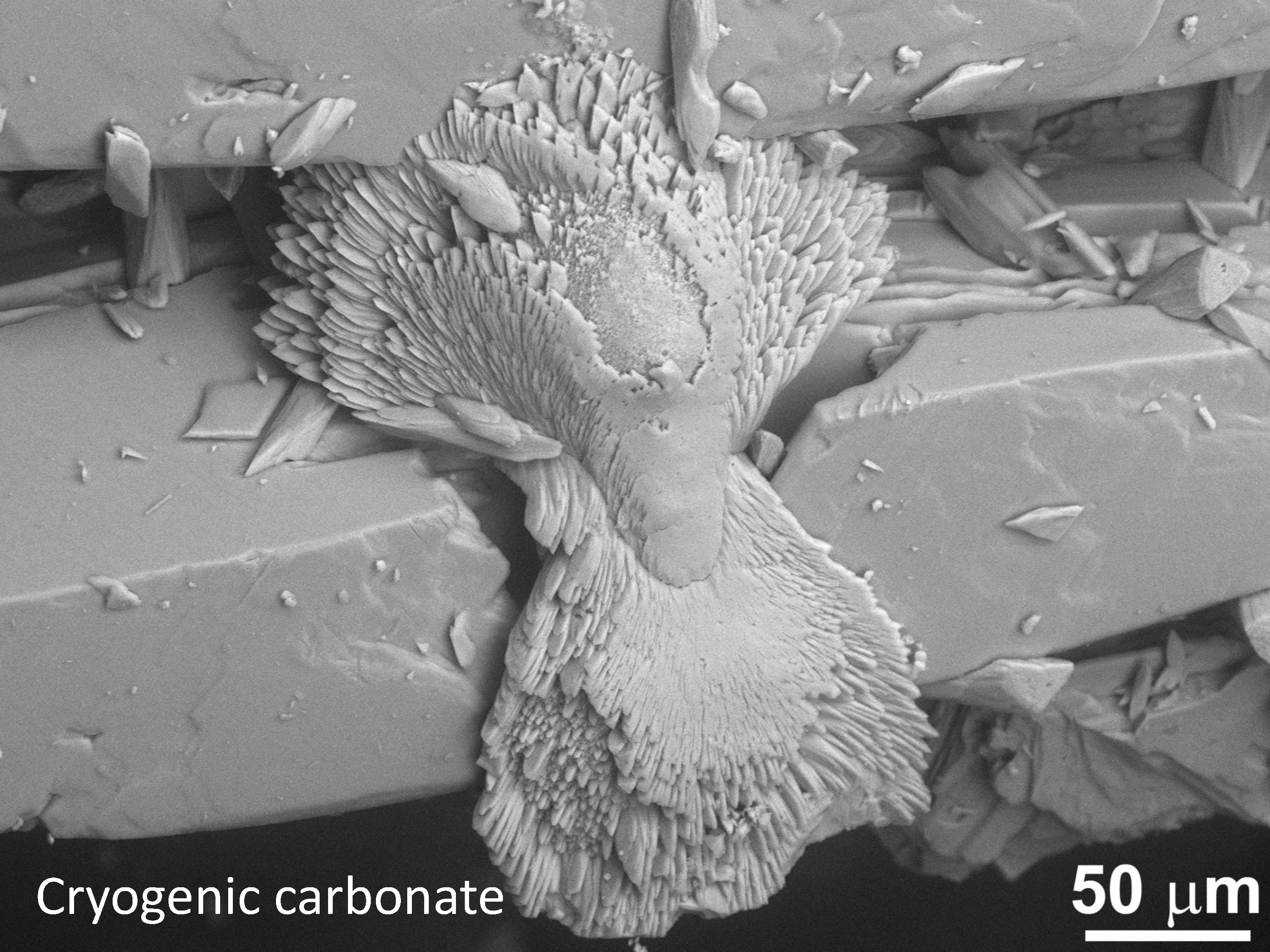
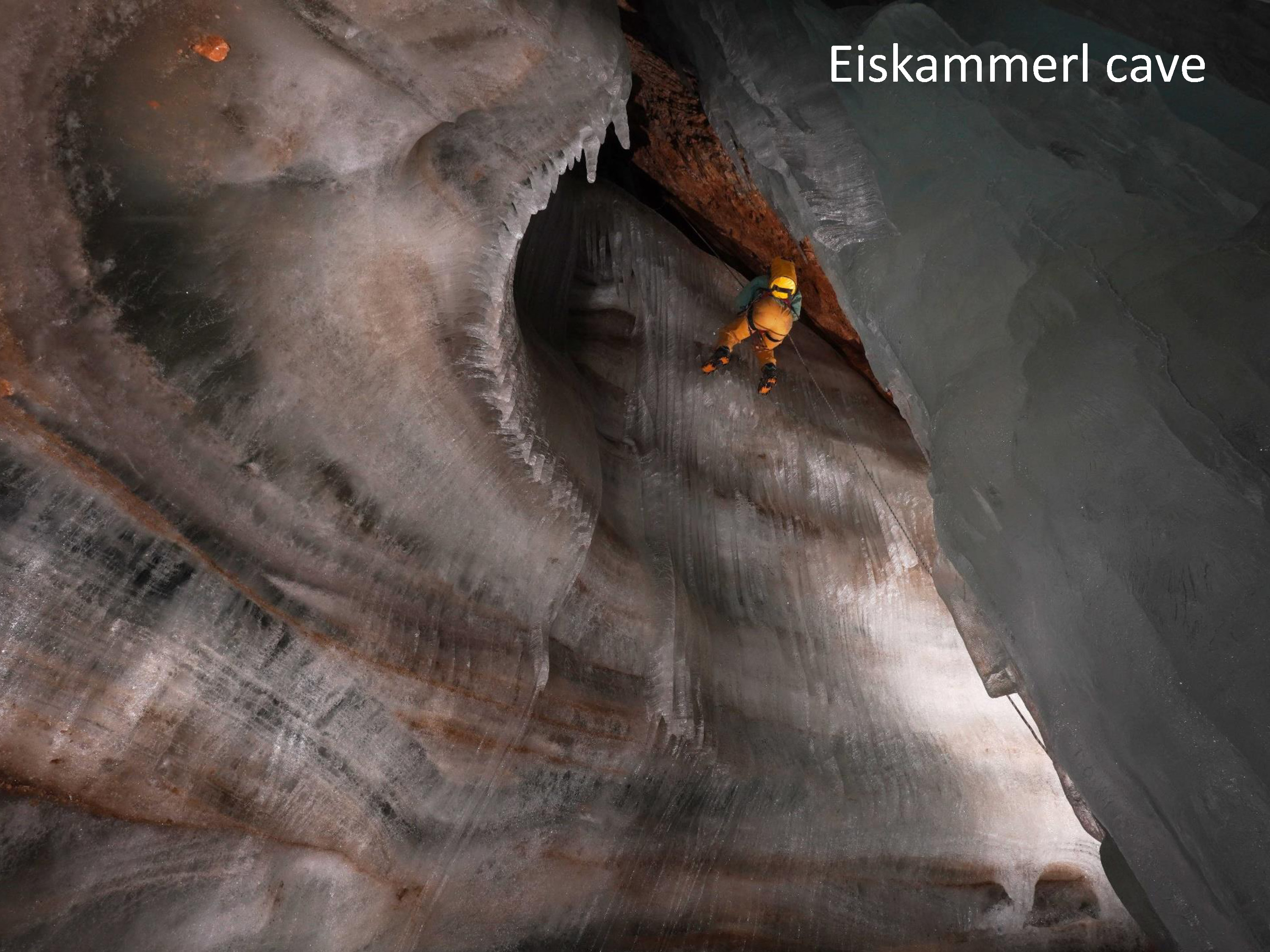
Coarse crystalline cryogenic cave carbonates (CCC for short) are a unique type of deposits in caves, which are believed to form in freezing pools of water on bodies of cave ice during times of slow thawing of permafrost. These deposits hold high promises as a key archive to identify and date permafrost thawing events in the past, to reveal permafrost dynamics on millennial timescales and to understand the vulnerability of permafrozen ground in recent decades both at high latitudes and in high mountain regions. Although known since the 1990s, CCC have received wide-spread attention only in recent years [e.g., 1, 2]. Despite their relevance and increasing popularity, fundamental questions about their origin, composition and mode of formation are still unanswered.
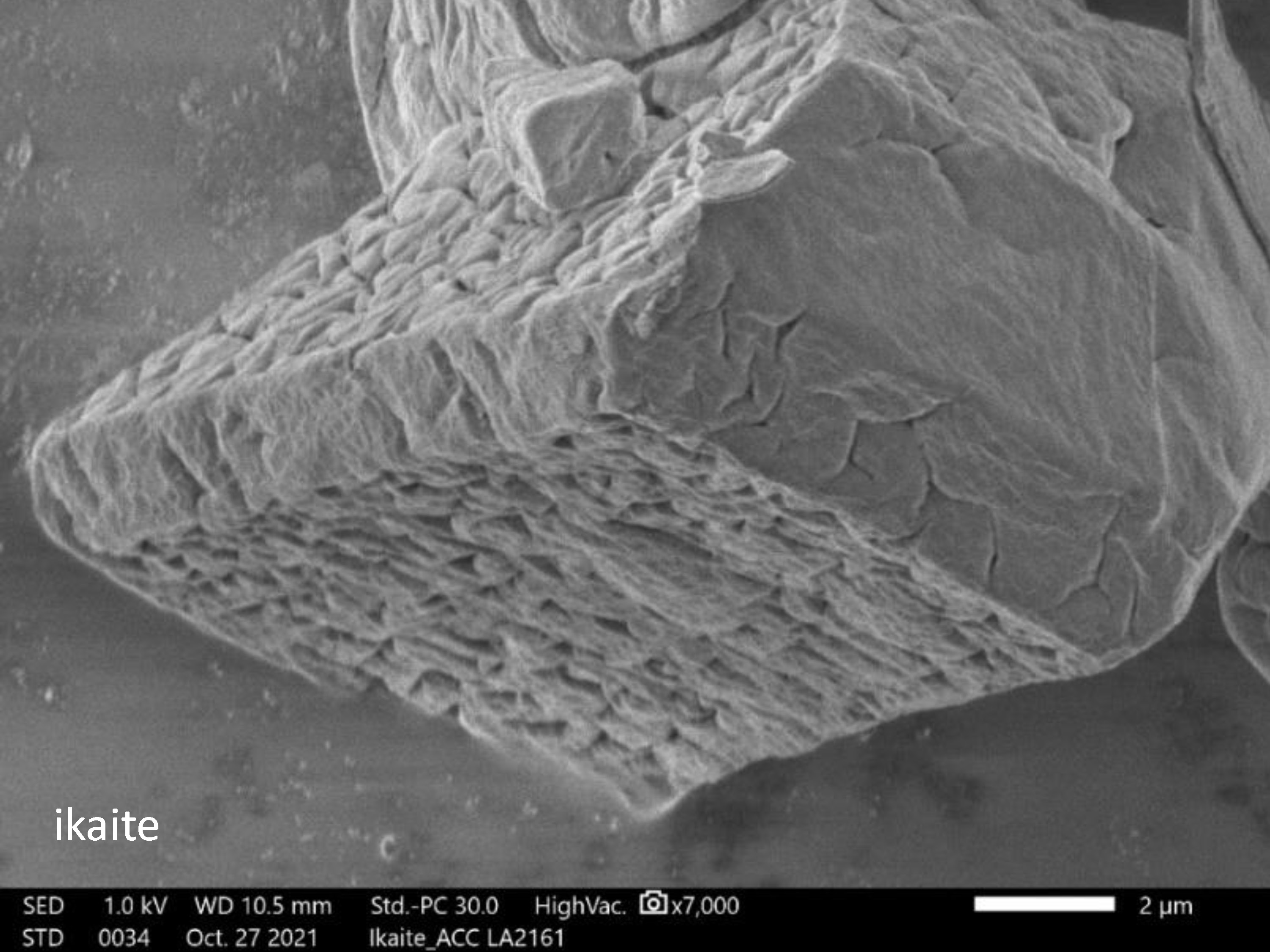
This project aims to tackle long-standing questions, which have important implications for the interpretation of CCC formation and proxy data and are pivotal for identifying permafrost thawing events. Specifically, we plan to (1) identify the initial carbonate phase/s during precipitation of CCC, and (2) determine the possible reaction pathways that lead to the final calcite commonly observed in field studies. Our preliminary observations led to the hypothesis that ikaite, CaCO3 hexahydrate, could be a precursor of cryogenic calcite, but it is unclear whether other hydrous (e.g., monohydrocalcite) and possibly amorphous phases, shown by recent observations of samples from a cave in Hungary [4], exist as well. We plan to test the hypothesis of ikaite being a precursor phase by investigating the ultrafine of a range of CCC and preparing cryogenic samples in the laboratory under controlled conditions. In particular, we plan to study naturally formed CCC and search for evidence of phase transformations. We will also sample CCC in-situ in ice caves of the Alps and transport them to the laboratory in cold conditions preventing their transformation into calcite (which occurs > 5-7 °C). In parallel to the natural samples, we plan to design experiments to study carbonate precipitation under controlled cryogenic physico-chemical conditions. We propose to measure both natural and synthetic samples using cutting-edge petrographic, mineralogical, crystallographic and geochemical techniques. We will determine the structure of initial carbonate phase(s), elucidate their chemical and isotopic compositions and monitor their transformation.
[1] Žák, K., Onac, B.P., Kadebskaya, O., Filippi, M., Dublyansky, Y., Luetscher, M. (2018): Cryogenic Mineral Formation in Caves, in: Perşoiu, A., Lauritzen, S.-E. (Eds.), Ice caves, Elsevier, Amsterdam.
[2] Kluge, T., Affek, H.P., Zhang, Y., Dublyansky, Y., Spötl, C., Immenhauser, A., Richter, D.K. (2014): Clumped isotope thermometry of cryogenic cave carbonates. GCA 126, 541–554.
[3] Dublyansky Y., Moseley G. E., Lyakhnitsky Y., Cheng H., Edwards R. L., Scholz D., Koltai G., Spötl C. (2018): Late Palaeolithic cave art and permafrost in the Southern Ural. Sci. Rep. 8, 12080.
[4] Demény, A, Németh, P., Czuppon Gy, Leél-Őssy Sz., Szabó M, Judik K, Németh T & Stieber J (2016) Formation of amorphous calcium carbonate in caves and its implications for speleothem research. Sci. Rep. 6 39602.
2. Title: Cryogenic cave carbonates
Project numbers: NKFIH ANN134433 (ANN141894) and FWF FI5050
Interval: 01.03.2021-30.11.2025
Project leaders: Yuri Dublyansky, Christoph Spötl, and Péter Németh
Abstract
Coarse crystalline cryogenic cave carbonates (CCC) represent a unique type of cave deposits that holds high promises as a key archive for identifying the former presence of permafrost and determining the exact timing of its thawing. The increasing popularity of this hitherto neglected archive is in contrast to the very small number of fundamental studies focused on the origin of CCC, their possible precursors and the particularities of crystal growth. This project aims to tackle long-standing questions which have important implications for the interpretation of CCC formation and the use of this archive for paleo-permafrost research. Specifically, we aim to (1) identify and sample in-situ CCC and transport them to the laboratory in cold conditions, (2) examine them using cutting-edge petrographic, mineralogical, crystallographic and geochemical techniques, and (3) establish a setup to precipitate CCC in the laboratory under controlled conditions with the purpose to study the effects of various phyisco-chemical parameters on CCC properties. The two research groups are highly complementary and breakthroughs in the understanding of CCC formation can be achieved only through their joint efforts. The Austrian team unites world-class field expertise in cave science and CCC, whereas the Hungarian team members are experts in state-of-the-art characterization and synthesis of metastable (nano)crystals. The two groups have successfully worked together in the past and the joint effort resulted in the discovery of a new calcium carbonate. This project will strengthen the ties between the groups and allow early-career scientists to benefit from these transnational research activities.
Publications
1. Németh P, Mugnaioli E, Gemmi M, Czuppon G, Demény A, Spötl C: A nanocrystalline monoclinic CaCO3 precursor of metastable aragonite, Science Advances 4: (12) eaau6178, 2018
Abstract
Despite its thermodynamical metastability at near-surface conditions, aragonite is widespread in marine and terrestrial sediments. It abundantly forms in living organisms, and its abiotic formation is favored in waters of a Mg2+/Ca2+ ratio > 1.5. Here, we provide crystallographic evidence of a nanocrystalline CaCO3 polymorph, which precipitates before aragonite in a cave. The new phase, which we term monoclinic aragonite (mAra), is crystallographically related to ordinary, orthorhombic aragonite. Electron diffraction tomography combined with structure determination demonstrates that mAra has a layered aragonite structure, in which some carbonates can be replaced by hydroxyls and up to 10 atomic % of Mg canbe incorporated. The diagnostic electron diffraction features of mAra are diffuse scattering and satellite reflections along aragonite {110}. Similar features have previously been reported—although unrecognized—from biogenic aragonite formed in stromatolites, mollusks, and cyanobacteria as well as from synthetic material. We propose that mAra is a widespread crystalline CaCO3 that plays a hitherto unrecognized key role in metastable aragonite formation.
link: https://www.science.org/doi/10.1126/sciadv.aau6178
2. Németh P, Töchterle P, Dublyansky Y, Stalder R, Molnár Zs, Spötl C. Tracing structural relicts of the ikaite-to-calcite transformation in cryogenic cave glendonite, American Mineralogist 107, 1960-1967 (2022).
Abstract
Ikaite is a calcium carbonate hexahydrate that forms at temperatures close to the freezing point of water, thus its occurrence is associated with cryogenic conditions. This mineral is metastable and quickly transforms to calcite at temperatures above 5 °C. Pseudomorphs of calcite after ikaite are known as glendonite. The nanostructure of 25,000-43,000 year-old glendonite from Victoria cave (Southern Ural, Russia) was investigated in search of structural features indicative of the ikaite-to-calcite transformation. Scanning electron microscope images display several micrometerto submicron-size pores and indicate high intergranular porosity among the loosely aggregated grains. Transmission electron microscopy (TEM) data show evidence of 10-20 nm nanotwins (twin law (10¯14)) and 10-40 nm overlapping nanograins. Scanning TEM images reveal that the individual grains contain 5-10 nm long and 2-4 nm wide mesopores (size between 2 and 50 nm), which are aligned parallel to [10¯10] of calcite and might be associated with a crystallographically oriented dehydration of the precursor ikaite. Fourier transform infrared spectroscopy revealed no evidence of structural water but absorption bands related to molecular water trapped in fluid inclusions are present. Nitrogen absorption/desorption measurements show that the specific surface area of 5.78 m2/g and the pore volume of ~0.07 cm3/g for calcite, the constituent of glendonite, are comparable to those of a common natural calcite. We suggest that the aligned mesopores, frequently occurring twins, small grain size, presence of aqueous inclusions and the high porosity arise from the ikaite-to-calcite transformation and thus may be used as criteria for the former presence of ikaite and hence for cold paleotemperatures. However, since similar features might also be common in biogenic carbonates, the diagnostic macroscopic pseudomorphs after ikaite are equally important for identifying glendonites and inferring cryogenic conditions.
link: http://www.minsocam.org/msa/ammin/AM_Preprints/8162NemethPreprint.pdf
3. Spötl, C., Koltai, G. and Dublyansky, Y. Mode of formation of cryogenic cave carbonates: Experimental evidence from an Alpine ice cave. Chem. Geol. 638, 121712. (2024)
Abstract
Coarsely crystalline carbonates that formed cryogenically in caves (CCCcoarse for short) are important paleoenvironmental archives that provide evidence of former perennial ice deposits in currently ice-free caves and allow the timing of the past freezing conditions close to 0 °C in the subsurface to be determined. Despite their significance, the mode of formation of these deposits has never been observed in statu nascendi.
We conducted a series of freezing experiments in an Alpine ice cave to test the conceptual model of CCCcoarse formation in freezing pools of water in perennial ice deposits. Our results document a number of features associated with the freezing of such confined water bodies, including ice bulging, cracking and episodic expulsion of water. These observations help explain the degassing of carbon dioxide required to maintain carbonate precipitation in these semi-closed pockets of slowly freezing water. Our experiments yielded a range of morphological types of cryogenic calcite crystals and aggregates comparable to those reported from CCCcoarse from currently ice-free caves elsewhere. The experimentally grown crystals also exhibit the same depleted O isotope composition characteristic of natural carbonates interpreted as being formed subaqueously in a semi-closed pools subject to freezing. The main difference to naturally formed CCCcoarse is their smaller crystal size, reflecting the comparably short freezing time of our experiments of less than two weeks.
This study confirms the conceptual model explaining the formation of CCCcoarse in localized pools in ice and calls for a revision of the currently existing classification scheme for cryogenic cave carbonates.
link: https://www.sciencedirect.com/science/article/pii/S0009254123004126
4. Lange-Enyedi, NT ; Németh, P; Borsodi, AK ; Spötl, C; Makk, J. Calcium carbonate precipitating extremophilic bacteria in an Alpine ice cave. SCIENTIFIC REPORTS 14 : 1 2710 (2024)
Abstract
Extensive research has provided a wealth of data on prokaryotes in caves and their role in biogeochemical cycles. Ice caves in carbonate rocks, however, remain enigmatic environments with limited knowledge of their microbial taxonomic composition. In this study, bacterial and archaeal communities of the Obstans Ice Cave (Carnic Alps, Southern Austria) were analyzed by next-generation amplicon sequencing and by cultivation of bacterial strains at 10 °C and studying their metabolism. The most abundant bacterial taxa were uncultured Burkholderiaceae and Brevundimonas spp. in the drip water, Flavobacterium, Alkanindiges and Polaromonas spp. in the ice, Pseudonocardia, Blastocatella spp., uncultured Pyrinomonadaceae and Sphingomonadaceae in carbonate precipitates, and uncultured Gemmatimonadaceae and Longimicrobiaceae in clastic cave sediments. These taxa are psychrotolerant/psychrophilic and chemoorganotrophic bacteria. On a medium with Mg2+/Ca2+ = 1 at 21 °C and 10 °C, 65% and 35% of the cultivated strains precipitated carbonates, respectively. The first ~ 200 µm-size crystals appeared 2 and 6 weeks after the start of the cultivation experiments at 21 °C and 10 °C, respectively. The crystal structure of these microbially induced carbonate precipitates and their Mg-content are strongly influenced by the Mg2+/Ca2+ ratio of the culture medium. These results suggest that the high diversity of prokaryotic communities detected in cryogenic subsurface environments actively contributes to carbonate precipitation, despite living at the physical limit of the presence of liquid water.
link: https://www.nature.com/articles/s41598-024-53131-y
5. Lázár, A ; Demény, A ; Hegyi, I ; Aradi, LE ; Garvie, LAJ ; Németh, P. (2025) Oxygen isotopic re-equilibration during transformation of ikaite to calcite via amorphous calcium carbonate. CHEMICAL GEOLOGY 2025 Paper: 122980 (2025)
Abstract
Glendonites are calcite pseudomorphs of ikaite (CaCO3·6H2O), a mineral that typically forms below 4 °C. Ikaite is found in marine clastic sediments, caves and lacustrine sediments, and its presence is correlated with cold paleo-environments. However, it is uncertain whether the isotopic composition of glendonite preserves the low-temperature paleoclimate conditions. Here we study the ikaite to calcite transition by following the evolution of solutions containing ikaite, prepared at pH 12.1, 10.3 and 9.1, and filtered materials exposed to air. Ikaite transformation starts with the formation of 100–200 nm-sized amorphous calcium carbonate (ACC) on the surface of ikaite grains, which transforms to carbonates dominated by calcite. In Mg-free solutions, vaterite also forms, whereas low concentrations of Mg (e.g., 26 mg/l) favor aragonite formation. Our data suggest that synthetic ikaites are formed with strong 16O-enrichment relative to other carbonate species due to kinetic fractionation. The ikaite-derived carbonates formed in contact with ambient air show a minor δ13C change (−3.0 ± 0.8 ‰) relative to ikaite (−4.2 ± 0.3 ‰), but their oxygen isotope compositions remain constant. In contrast, transformation in solutions results in significant oxygen isotopic changes (from 17.7 to 20.5 ‰). Calcite-water oxygen isotopic equilibrium is approached within one week at 8 °C, and one day at 15 °C. Our experiments suggest that glendonite calcites formed by ikaite dehydration during early diagenesis undergo oxygen isotope exchange with pore waters and can record temperature and water composition conditions similar to those of the ikaite formation.
Link: https://www.sciencedirect.com/science/article/pii/S0009254125003705
6. Németh, P.; Demény, A ; Pekker, P ; Rečnik, A ; Ribić, V ; Gavryushkin, PN ; Banev, M, Bruno, M ; Spötl, C ; Pettauer, M ; Dietzel, M, Levente I, Pósfai M. Transitional calcite-aragonite stacking as a signature of hexagonal aragonite in biogenic and inorganic deposits. Under review in Communications Earth & Environment, 2026
Abstract
Aragonite abundantly crystallizes in marine and continental environments and occurs ubiquitously in biominerals, despite being metastable under ambient conditions. To resolve this apparent contradiction, we studied the crystal structure of aragonite that grew on calcite of biogenic (Berger Károly cave; Hungary) and inorganic (Sonnenberg; Italy and Erzberg; Austria) origin, in a range of natural settings and temperatures. Electron microscopy measurements show (001) stacking faults (SFs) in the first-grown aragonite. Structural modelling combined with theory-based optimization suggests that the crystal structure of this new type of SF can be explained by the presence of (000l) calcite-like layers within aragonite. Abundant (0001) calcite twins occur in the last-grown calcite, and hexarag, the hypothetical hexagonal polymorph of aragonite, was identified across the calcite twin interfaces. Oxygen isotope data indicate that both the Berger-Károly and Sonnenberg samples formed under non-equilibrium conditions, whereas the Erzberg aragonite formed near equilibrium, possibly explaining the defect-free structure. The presence of (001) SFs and (0001) calcite twins testifies to the formation of transitional calcite-aragonite structures, suggests the occurrence of a hexarag precursor phase and provides new insights into the long-debated mechanism of metastable aragonite formation in dynamically evolving (bio)geologic environments.
Conferences/workshops/seminars
Cryogenic carbonates EGU SSP3.4
conveners: Péter Németh, Gabriella Koltai and Katja Goetschl
https://meetingorganizer.copernicus.org/EGU23/session/45287
Carbonates precipitated from freezing solutions are indicators of cryogenic conditions. They have unique mineralogy, preserve distinctive geochemical signature and their occurrence is in the focus of paleoclimate research. To understand the wealth of information recorded by them requires detailed mineralogical, petrological, sedimentological and geochemical investigations of natural and synthetic samples. This session aims to improve our understanding of cryogenic carbonate distribution, origin, composition and mode of formation. We welcome oral and poster presentations from a wide range of research topics dealing with the occurrence, mineralogy, petrology, sedimentology and geochemistry of natural and synthetic cryogenic carbonates.
Carbonates – workshop, Veszprém, 2022. July 4-5.
https://csfk.org/carbonates-workshop-veszprem-2022-julius-4-5/
The conference dealt with mineralogy and geochemistry of calcium carbonates, one of the major constituents of our Earth. The modifications of calcium carbonates are ubiquities, they occur from mantle-derived melts to shells of living organisms. Their mineralogical and geochemical investigations are still at the forefront of science.